Build the whole journey
Matching a scholar with a mentor was one step in a longer process. Staff needed to review suggestions. Both participants needed to accept the match. Someone had to schedule the session, prepare for it, confirm that it happened, and follow up when the process stalled.
I designed three connected experiences:
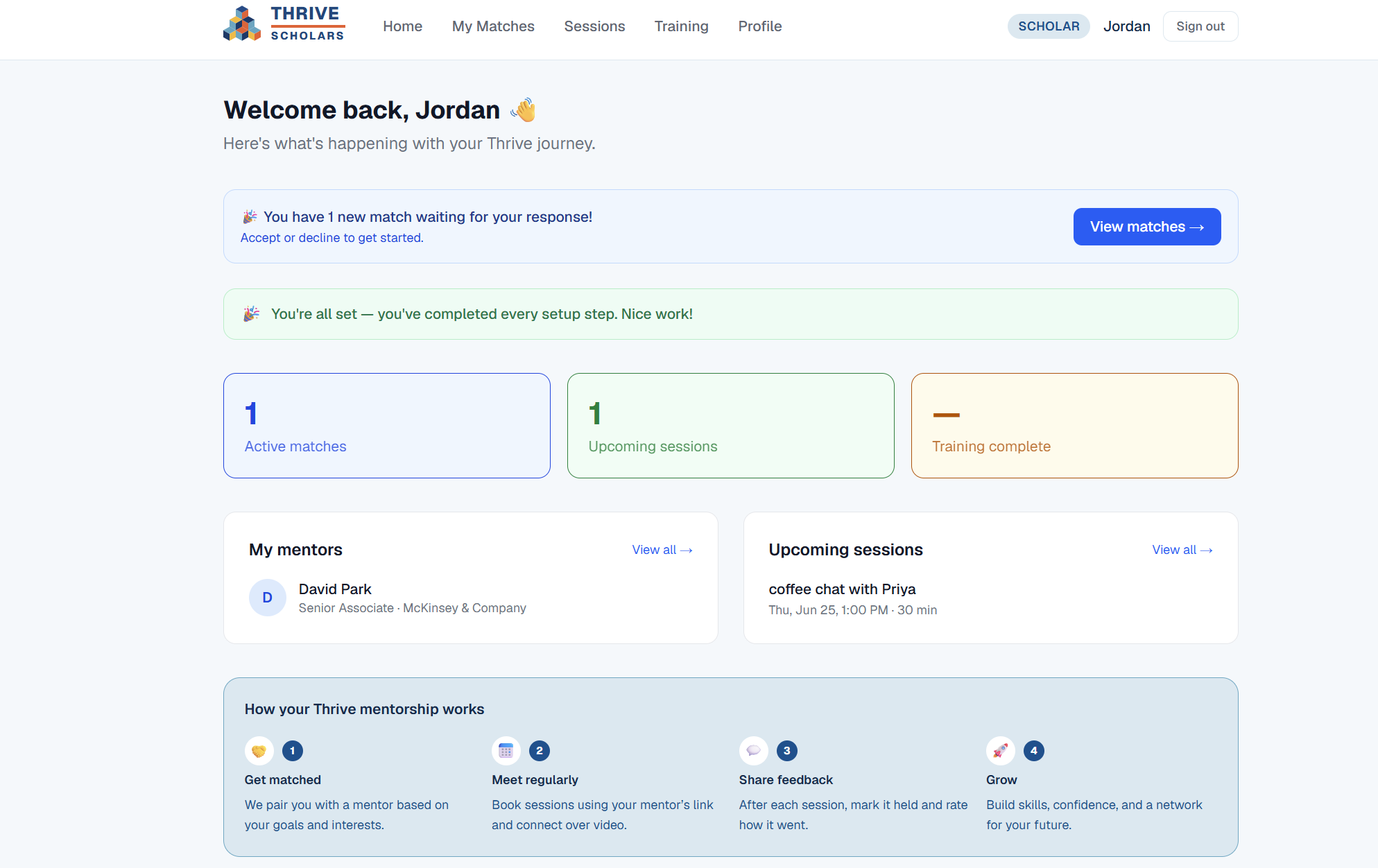
- Scholars: review a suggested mentor, respond to a match, book sessions, access preparation materials, and record feedback.
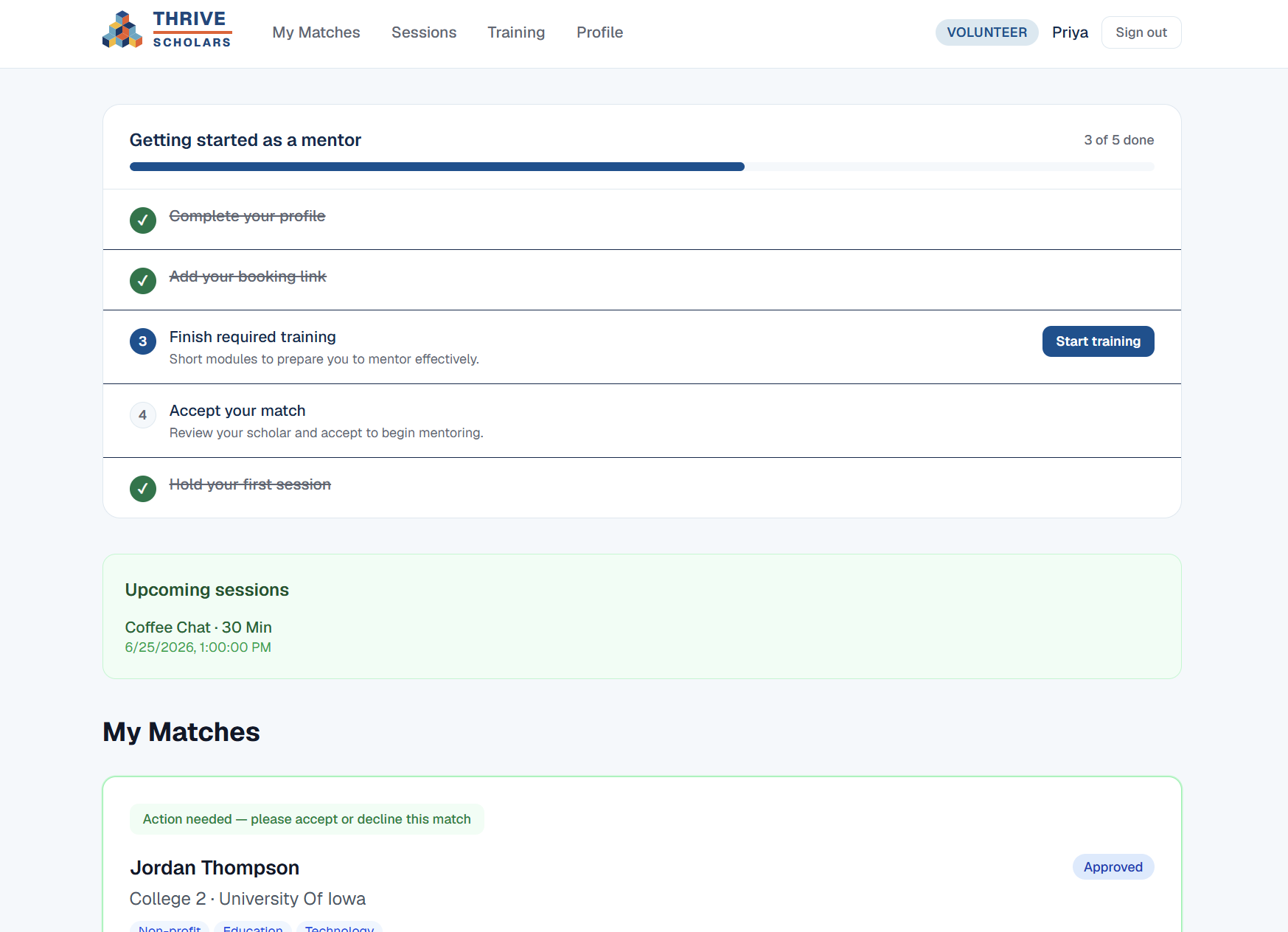
- Volunteer mentors: complete onboarding, respond to matches, share a booking link, prepare for sessions, and confirm participation.
- Program staff: configure programs, approve matches, monitor responses and interactions, manage reminders, and review automation activity.
The prototype supported mentorship, coffee chats, mock interviews, and resume reviews. AI-assisted matching surfaced suggestions using profile information and adjustable program weights, with staff approval before a match moved forward.
The aim was to show how the program would operate across handoffs, including what happened when a match went unanswered or a session needed follow-up.
Make the operating requirements visible
The walkthrough covered scheduling, session tracking, preparation content, reminders, and an automation log. Salesforce connection endpoints and email workflows were prepared, while connection to the client's Salesforce environment and verified sending domain remained outstanding.
Building the prototype also made the next stage easier to discuss. Production ownership would require security review, integration validation, training, monitoring, support, and recovery procedures. A demonstration could establish workflow fit; those operating responsibilities still needed named owners and a realistic plan.
My role covered product design and development, workflow design, and the build-versus-buy discussion. The implementation used Next.js and TypeScript, Supabase, embedding-based matching, and Cal.com scheduling.
Give the decision a fair test
As the person who built the custom option, I had an interest in seeing it succeed. That made a balanced comparison especially important.
I proposed evaluating the options against workflow fit, reliability, total cost of ownership at different program sizes, weekly support burden, and the experience of all three user groups. A scoped parallel pilot could provide further evidence while protecting core program operations. A support owner, documented fallback, and security review belonged in that proposal too.
The outcome
The prototype gave the organization a concrete way to evaluate workflow fit alongside the responsibilities of owning custom software. Thrive Scholars ultimately chose an established platform, prioritizing vendor-managed support and ongoing operations. My contribution was making the custom option tangible and helping clarify the tradeoffs behind that decision.